
Colorectal cancer – third most common form of cancer

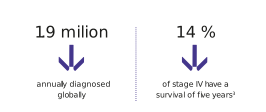
Colorectal cancer is the third most common form of cancer globally after lung- and breast cancer and the second most deadly. Despite several medical advances in cancer research, the mortality rate for metastatic colorectal cancer remains high – 86 percent of patients with disseminated disease die within five years.
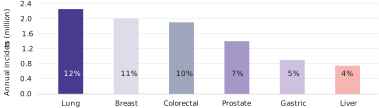
Colorectal cancer, the collective name for cancer of the colon and rectum, a disease arising from uncontrolled cell growth in the large intestine or the rectum. Colon cancer occurs equally often in men and women, while rectal cancer is somewhat more common in men. The condition primarily affects older individuals, with the majority of cases diagnosed after the age of 70. However, incidence is increasing among younger adults (aged 25–49), while remaining stable in the older age groups. Globally, more than 1.9 million new cases of colorectal cancer were diagnosed in 2022, and approximately 0.9 million people died from the disease that same year.1
Rising incidence among younger adults in the US
In 2026, the American Cancer Society published new data revealing a significant increase in both incidence and mortality from colorectal cancer among adults aged 20–49. Already in 2023, colorectal cancer had become the leading cause of cancer-related death in people under 50 in the US. Mortality in this age group has risen by more than 1 percent annually since 2005, and three in four patients are now diagnosed at an advanced stage of the disease. Key contributing risk factors are believed to include rising rates of obesity, low levels of physical activity, and high consumption of ultra-processed foods.
High mortality when detected late
Colorectal cancer is the second most common cause of cancer-related death worldwide, after lung cancer – yet the prognosis is good when caught early. Organized screening programs, which include analyzing stool for the presence of blood, can identify cancer or precancerous changes at an early stage, significantly reducing mortality. Patients diagnosed at a late stage, when the disease has already spread to other organs and formed metastases, face a considerably poorer prognosis. For metastatic colorectal cancer, approximately 86 percent of patients do not survive beyond five years after diagnosis.2

Current standard treatment
The current standard treatment for metastatic colorectal cancer is based on 5-FU, one of the most widely used cytostatic agents in the world, in combination with folate-based drugs and other chemotherapies such as oxaliplatin or irinotecan, as well as biologics such as bevacizumab and cetuximab/panitumumab. These combinations have been the clinical standard since the early 2000s and continue to form the backbone of first- and second-line treatments. However, current folate-based drugs require stepwise metabolic activation before the active metabolite can exert its effect, and despite combination therapy, fewer than half of patients with metastatic colorectal cancer respond adequately to existing folate-based regimens. Immunotherapies and targeted therapies have been introduced as additions for subgroups of patients with specific mutations, but cover only a small fraction of the overall patient population.
Metastatic cancer as initial focus for arfolitixorin
Colorectal cancer is classified into stages based on the extent and spread of the tumor. In stage IV, when the disease has metastasized beyond the intestine, surgery on the primary tumor is often avoided as it does not generally improve prognosis. At this stage, systemic chemotherapy is the dominant treatment strategy, aimed at easing symptoms and prolonging survival, sometimes in combination with other forms of therapy. Even as new drugs emerge and treatment combinations are refined, 5-FU-based regimens are expected to remain the cornerstone of colorectal cancer treatment for the foreseeable future – underscoring the potential value of more effective folate-based enhancers such as arfolitixorin.
Most common cancers
10 % of forms of cancer detected annually are colorectal cancer2
Last updated: